


I downloaded Crumbl expecting a convenient way to order cookies, but the app is more interesting when viewed as a repeat-visit tool rather than a simple digital menu. It puts the weekly decision, ordering process, and loyalty activity in one place, which makes it easy to see why the app has attracted a large audience. In my experience, its real test is not whether it makes the first order pleasant; it does. The better question is whether it remains useful after the excitement of trying a rotating cookie selection wears off.
This is a free Food & Drink app from Crumbl Franchising, LLC. It is rated for Everyone, works on devices running Android 8.0 or later, and the current version is 7.3.22. The app has an average rating of 4.8 from around 774 thousand ratings, with more than 5 million installs. Those figures suggest that it is not merely a novelty download for occasional visitors. Many people appear to use it as part of their regular Crumbl routine, and that is the standard I used while assessing it.
From the first order to a lasting routine
Why the first week feels so easy
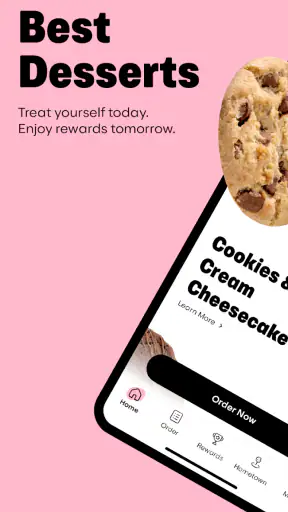
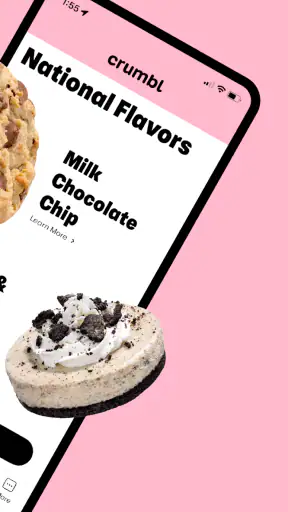
The strongest first impression is how quickly the app turns a craving into a decision. Instead of searching for a nearby location, checking what is available, and figuring out the order process from scratch, I can open the app and move directly toward the current selection. That matters because Crumbl’s appeal is closely tied to discovery. A cookie that sounds appealing today may not be the one I want next time, so a current, visually focused menu is more useful here than a static list.
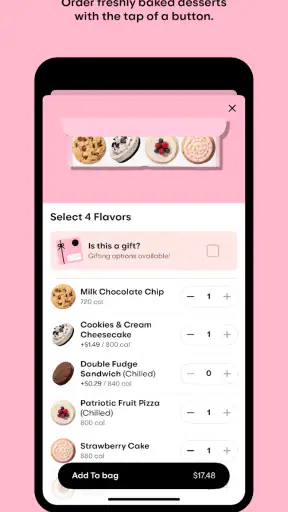
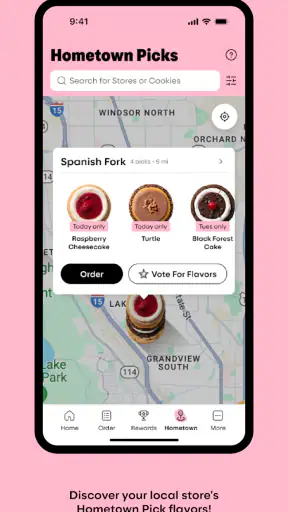
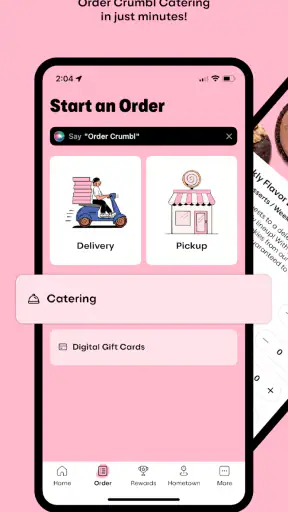
The ordering flow is aimed at people who already know they want Crumbl. I found it more comfortable for planning a pickup than for browsing casually with no intention to buy. The app encourages me to choose a location, review the available items, select an order, and finish the process without needing to call the store. For a quick treat after work or a box for a small gathering, that directness is valuable.
There is also a practical difference between using the app and simply walking into a store. With the app, I can make the choice before leaving home, which reduces the time spent standing at the counter deciding. That is particularly helpful when I am ordering for several people with different preferences. I can review the selection at a calmer pace and avoid trying to remember everyone’s request while the line moves.
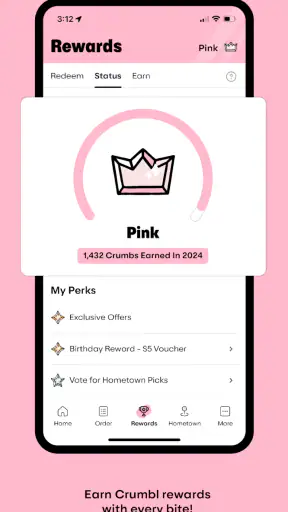
The first-week appeal also comes from the reward layer. The promise of earning Crumbs and unlocking rewards gives the app a reason to remain installed after a single order. I do not have to treat it as a one-time checkout screen; it is designed to remember that I am a returning customer and make future visits feel connected. For someone who already buys from Crumbl, this is more useful than a generic delivery app where the shop is only one option among hundreds.
What I would check before placing an order
I would not open the app only to confirm that a favorite cookie is permanently available. Crumbl’s rotating approach means the app works best when I am willing to choose from what is currently offered. That creates a sense of occasion, but it also means the app cannot fully solve the disappointment of wanting a particular item and not seeing it. The app makes the current choice easier; it does not remove the need to be flexible.
Before paying, I would also review the selected location and the order details carefully. This is a small habit, but it prevents a common mobile-order mistake: completing a purchase for the wrong store or assuming that a choice made on one visit will remain the same on another. The app is quick enough that it encourages fast decisions, so a final pause is worthwhile when the order is for a group.
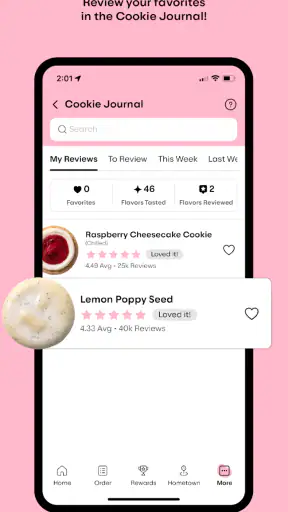
Another useful first-week habit is to explore the reward area before assuming that every purchase has the same value. The app’s loyalty features are part of its identity, and understanding how Crumbs and rewards fit into my own buying pattern helps me decide whether they are genuinely useful or merely persuasive. If I visit rarely, I should judge the app by ordering convenience rather than by the hope of reaching a reward quickly.
Where it fits better than the usual alternatives
A general delivery marketplace is better when I want to compare Crumbl with restaurants, cafés, or other dessert shops in one search. It can also be more convenient when I am already placing a larger meal order elsewhere. The dedicated app wins when Crumbl is the specific destination. It removes unrelated choices and keeps the menu, location selection, order process, and loyalty activity focused on one brand.
Ordering in person still has advantages. I can ask a staff member a question directly, see the shop environment, and avoid spending time with a phone when I am already nearby. The dedicated app is not automatically better for every visit. Its advantage is preparation and repeat use, not replacing the human interaction of a store visit.
The realistic everyday scenario
Imagine I am bringing dessert to a casual evening with friends. I open the app before leaving, check the current selection, choose a nearby location, and build an order without trying to coordinate everything at the counter. If I have already used the app, my previous familiarity makes the process even faster. I can arrive with a clear plan instead of hoping the store has enough of what I want while I wait.
That scenario shows the app at its best: the order is planned, the destination is known, and the purchase is specific. It is less compelling if I am undecided between many kinds of food, if I need a full meal, or if I am simply passing a store and want to make an immediate purchase. The app has a clear job, and it performs that job better when the decision is already mostly made.
Why the second and third visits matter
After the initial novelty, the useful question becomes whether the app saves effort each time. I found that its value depends on how often I buy and how much I care about tracking loyalty progress. A frequent customer gets a smoother repeat-order habit and a clearer reason to return to the same app. An occasional customer may still appreciate the ordering flow, but the reward system has less influence on the decision.
The app also benefits from the way Crumbl encourages curiosity. A changing selection gives me a reason to check again, even when I am not certain I will order. That can be enjoyable, but it can also turn the app into a temptation rather than a practical utility. I would keep notifications and checking habits under control if I am trying to reduce impulse purchases. Convenience is helpful, but convenience can also make a treat feel like an automatic decision.
Month-to-month value: convenience versus repetition
Over several weeks, the app earns its place mainly through reduced friction. I do not need to re-learn where to start, and the purpose remains clear: see the current Crumbl offering, choose a location, order, and keep track of loyalty progress. That consistency is more important than a long list of tools. I would rather have a focused app that handles the recurring task cleanly than a crowded application filled with features I never use.
The loyalty system can strengthen that habit, especially for customers who buy often enough to notice progress. Crumbs and rewards give purchases a cumulative feeling, which may make the dedicated app more attractive than ordering through a third-party service. However, I would not let the reward structure decide whether I need another box. A reward is only valuable if the purchase was worthwhile without it.
For families or offices, the app can be useful as a repeat planning tool. One person can handle an order for several people without passing around a paper menu or relying on memory. The trade-off is that group preferences may still require communication outside the app. The app can organize the final purchase, but it cannot guarantee that everyone agrees on the selection.
For someone who visits once every few months, the month-to-month advantage is smaller. The app remains free, so keeping it installed does not create a direct purchase cost, but unused apps still take up attention and storage. In that case, a mobile website, a store visit, or a general ordering service may be enough. I see the dedicated app as a strong fit for a habit, not as an essential tool for a rare craving.
Maintenance: what the app asks from me
The maintenance burden is fairly light, but it is not zero. I need to keep the app available on my device, make sure the location choice is correct, and review the current menu when I plan an order. Because the experience is tied to changing offerings, the app is more useful when I check it close to the time of purchase rather than relying on an old plan.
There is also a mental maintenance cost. A loyalty program works best when I remember that I have it and understand why I am using it. If I forget about the app between visits, the reward feature cannot create value by itself. I would treat Crumbs as a bonus attached to normal purchases, not as a reason to buy more often than I intended.
The app’s focus helps keep maintenance manageable. I am not managing a large collection of restaurants, delivery subscriptions, or unrelated food preferences inside it. That narrow purpose is a strength for Crumbl regulars. It is also the reason I would not recommend it as a general food-ordering replacement.
Small points of friction that become clearer over time
The most obvious limitation is dependence on Crumbl’s own selection cycle. If I want a fixed menu, a particular dessert, or a broad range of savory food, the app cannot meet that need. The ordering process may be convenient, but convenience does not compensate for a menu that does not match my craving.
Another limitation is the possibility of overchecking. A changing menu can make the app feel fresh, yet it can also encourage me to open it simply to see what is new. That is enjoyable for some users and tiring for others. The app’s recurring value is strongest when I use it deliberately, not when it becomes a constant source of food prompts.
There is a practical trade-off between speed and personal assistance. The app is efficient when I know the location and order I want. If I have a question that is easier to explain aloud, a store employee may be more helpful. I would not judge the app harshly for that; a focused ordering tool naturally handles routine decisions better than unusual conversations.
Who should keep it installed?
I would recommend keeping it installed if Crumbl is a regular treat, if I like checking the changing selection, or if I often place pickup orders for more than one person. Those users can benefit from having the ordering route and loyalty activity together. The app becomes part of a repeatable routine rather than another icon that is opened once and forgotten.
It is also a sensible choice for people who prefer planning ahead. Ordering before arriving can make a busy visit calmer, particularly when the purchase is for an office, family event, or group of friends. The app is less about discovering every food option in town and more about making one specific dessert stop predictable.
Who should skip it?
I would skip it if I rarely buy Crumbl, dislike loyalty programs, or prefer choosing food only after seeing all the nearby alternatives. I would also avoid relying on it as my main food app. A broad ordering platform is more suitable for comparing restaurants, combining a meal and dessert, or deciding among multiple cuisines.
Someone who wants a particular item available all the time may also find the rotating approach frustrating. The app makes the current offering visible, but it cannot turn a limited selection into a permanent one. In that situation, the store visit itself may not solve the problem either; the issue is the brand’s changing menu model, not simply the app interface.
How the novelty holds up
The novelty fades when the rotating selection stops feeling like an event. At that point, the app has to justify itself through practical savings in time and attention. I think it does, but only for the right customer. A regular visitor can use it as a dependable shortcut, while an occasional visitor may see little difference between opening the app and using another ordering method.
The strongest long-term feature is not any single screen. It is the combination of a current menu, a focused checkout path, and continuing loyalty progress. Each part supports the others: the changing selection gives me a reason to look, the order flow gives me a reason to stay, and Crumbs give repeat visits a sense of continuity. If one of those elements does not matter to me, the overall case becomes weaker.
I also appreciate that the app does not need to pretend to be more than it is. It is a dedicated Food & Drink companion for Crumbl, not a replacement for every way of buying food. That clarity helps me decide when to use it. I open it when I want Crumbl and want the process organized; I choose another option when I need comparison, variety, or personal assistance.
My long-term verdict
After looking beyond the first-order excitement, I think Crumbl earns lasting space for frequent customers rather than for everyone. Its free access, focused ordering flow, and loyalty features make repeat visits easier, and the app’s large user base reflects how naturally it fits the brand’s routine. The Everyone age rating also makes it broadly approachable, although the decision to use it regularly should still depend on personal spending and eating habits.
My main advice is to install it with a clear purpose. Use it to plan a Crumbl pickup, check the current selection, and keep loyalty activity in one place. Do not install it expecting a universal food marketplace, a permanent menu, or a substitute for asking store staff a complicated question. Those expectations would make the app seem limited when it is actually quite focused.
For me, the app survives the novelty test because it reduces repeated effort without demanding much maintenance. Its value is conditional, but the condition is simple: I need to buy from Crumbl often enough to appreciate a dedicated shortcut. If that describes you, I would recommend trying it and judging the rewards as an extra rather than the main reason to order. If you visit only occasionally or prefer comparing many food choices at once, I would leave it out and use the alternative that matches that broader habit.
The lasting value is convenience with a purpose, not novelty by itself. That makes this a well-focused app for Crumbl regulars, while keeping it an optional download for everyone else.


